
Sony Is Trying to Buy Tamron?

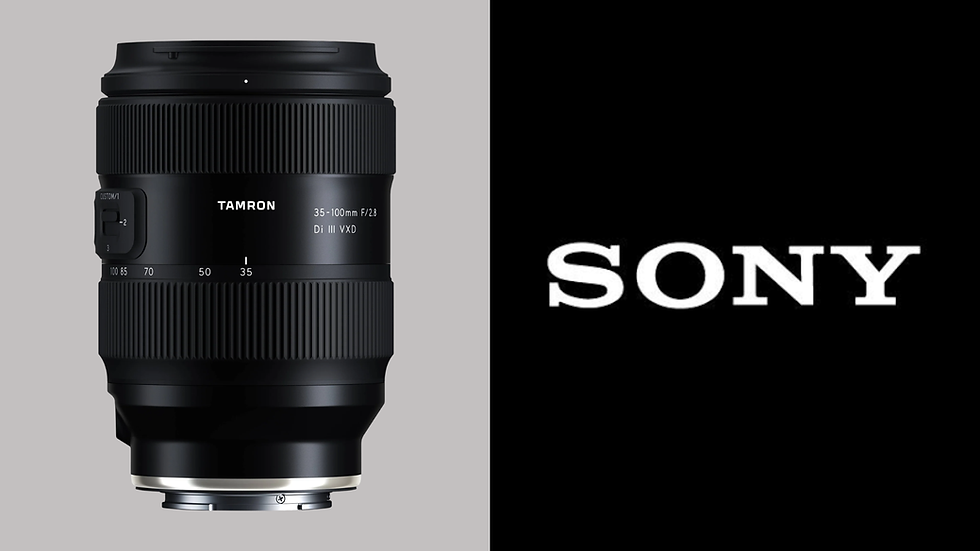
Sony has reportedly made a major offer to acquire Tamron, one of Japan’s largest lens manufacturers and the company behind more than 20 lenses for Sony’s E-mount mirrorless system.
According to an exclusive report from Japanese publication Diamond, Sony Group has offered 200 billion yen to buy Tamron outright. At current exchange rates, that is roughly $1.2 billion USD.

From Sony’s perspective, there are plenty of reasons why the deal would make sense. Tamron has become one of Sony’s closest partners over the years, producing a wide range of affordable, well-regarded E-mount lenses for both APS-C and full-frame cameras. That strong third-party lens ecosystem has been one of Sony’s biggest advantages in the mirrorless market, giving photographers a huge selection of lenses across almost every price range.
It also lets Sony concentrate more on developing premium G and G Master lenses, while Tamron fills many of the lower and mid-range gaps. It’s a partnership that has worked well for both companies.

The deal could have a much wider impact than just Sony, though. While E-mount has always been Tamron’s biggest focus, the company also develops lenses for Nikon Z, Fujifilm X, and other camera systems. On top of that, Tamron manufactures OEM lenses for several brands. Nikon’s Nikkor Z 17-28mm f/2.8, 28-70mm f/2.8, and 70-180mm f/2.8 are all widely believed to be produced by Tamron. The company has also said that nearly half of all the photographic lenses it manufactures are sold under another company’s brand name.
If Sony were to complete the acquisition, it would gain considerable influence over how Tamron supports competing camera systems. Whether that would lead to fewer lenses for rival mounts or simply business as
usual remains unknown.

The news has already generated plenty of discussion online, and the overall reaction has been cautious. Many photographers are worried that losing Tamron as an independent company could reduce competition, lead to higher lens prices, and slow the development of affordable third-party options. Others are particularly concerned about what it could mean for Nikon, Fujifilm, and other systems that currently benefit from Tamron’s support.
On the other hand, some people see a Sony acquisition as the lesser of two evils. With a private equity firm now holding the largest stake in Tamron, several people argue that Sony at least has a genuine long-term interest in keeping the company healthy and continuing to develop lenses, whereas a financial investment firm may be more focused on maximising short-term profits.

For now, however, it is important to remember that nothing has been confirmed. Even if Diamond’s reporting is accurate, acquisitions of this size can still fall apart before a final agreement is signed.


Comments